
Matching Your Boiler to Your Plans
When it comes to choosing a new boiler, one of the main considerations is how long you plan to be in your home. Are you planning to stay put for the next decade or less?
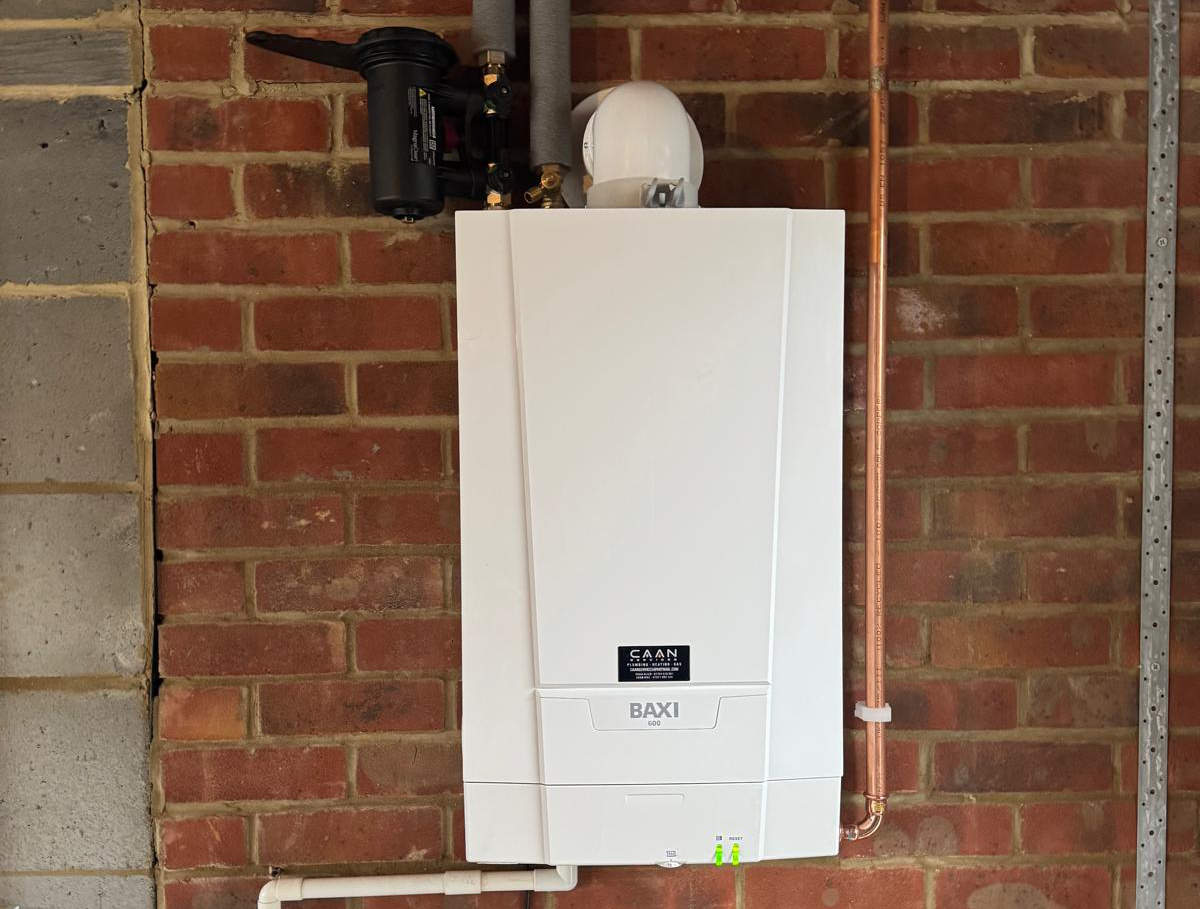
A premium boiler with a 10-year warranty offers superior build quality, better efficiency ratings, and comprehensive cover throughout your ownership.
Or are you thinking of moving within five years? A solid mid-range boiler offers excellent reliability and manufacturer support. You’ll recoup your investment through lower energy bills and won’t overspend on warranty periods you won’t use.
The key is making an honest assessment of a boiler installation. If you’re uncertain about your timeline, we’d advise that you lean towards quality. A premium boiler adds value to your property and appeals to buyers who recognise the quality of the heating infrastructure.
Powerflushing: The Essential Step for Boiler Longevity
Most installers don’t emphasise strongly enough that skipping the powerflush is likely to be a mistake in the long term. We do!
That’s because a powerflush blasts high-velocity water and cleaning chemicals through your heating system, dislodging years of accumulated sludge, rust particles, and limescale. This black gunk is your new boiler’s worst enemy. It clogs heat exchangers, blocks narrow pipes, and forces your boiler to work harder than designed.
The team will connect specialist equipment to your system, circulate cleaning agents, and then flush everything through until the water runs clear. They’ll test samples and add inhibitor chemicals to prevent future corrosion.
Why do we at CAAN Services say this is all so important? Well, without it, you can expect premature breakdowns. That shiny new boiler could fail within 18 months if dirty water corrodes internal components.
Most manufacturers’ warranties actually require proof of powerflush, or they’ll void your cover. The investment (typically £300-500) will extend your boiler’s lifespan by years. It’s non-negotiable if your system is more than five years old.
Installation Day: Timings and Smart Upgrades to Consider
You’ll need to budget a full working day for installation. Your heating and hot water will be off for six to eight hours whilst the engineers swap the boiler and recommission everything.
This downtime is your golden opportunity for upgrades.
- Thermostatic radiator valves (TRVs) let you control individual room temperatures rather than heating your entire home uniformly. Install them now whilst the system’s drained and you’ll save £150-200 versus doing it separately later.
- New circulation pumps work brilliantly on freshly cleaned systems. If your current pump is over seven years old, replace it during installation. You’ve already paid for the powerflush, you can maximise the benefit with components designed to work with clean water.
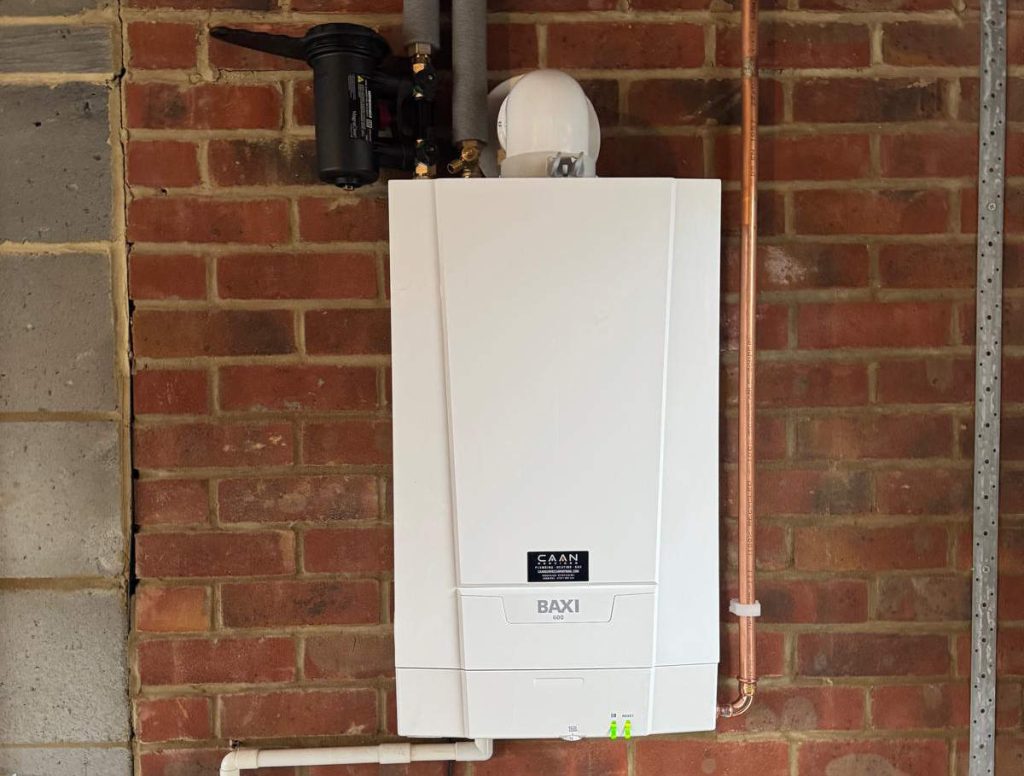
- Magnetic filters trap metallic debris before it reaches your boiler. Fitting one during installation costs half of what you’d pay as a standalone job.
- Smart thermostats and controls are far easier to fit during a boiler swap, when engineers are already working at the boiler and wiring. A smart thermostat lets you control your heating remotely via your smartphone and you can set schedules room by room. Better still, you can save between 8.4 and 16.5% of your heating’s energy use. Adding one now avoids a separate visit and keeps down installation costs.
At CAAN Services, we advise that you think strategically. Any work requiring system drainage makes sense now. Delaying means paying the call-out charges and labour costs twice.
Sizing and System Conversions: Getting Your Installation Right
Boiler sizing doesn’t require guesswork. For combination boilers, engineers test your cold water flow rate using a weir cup. This determines whether you need a 28kW, 35kW, or larger output to supply multiple taps simultaneously.
Swapping like-for-like? Fortunately, a heat-only boiler replacing another heat-only model means minimal disruption. Your existing pipework, hot water cylinder, and controls will still be compatible.
On the other hand, converting from gravity-fed to pressurised systems requires careful consideration. Older pipework buried in concrete screeds was never designed for mains pressure. When you pressurise the system, decades-old compression joints can fail, causing leaks beneath your floors.
A competent engineer surveys your pipework condition first. Sometimes a like-for-like swap proves wiser than risking expensive remedial work. If you’re set on conversion, factor in potential repiping costs, especially in properties built before 1990.
Get three quotes. Compare not just price but what’s included: powerflush, upgrades, system modifications, and crucially, what might go wrong.
Ready to find the perfect boiler for your home?
Simply click here to secure your free boiler quote survey.